Thursday, 23 April 2015

Honey badger don't care

We just finished a full week in Etosha National Park. It feels like a long time since we’ve been in a town! We’re now in Windhoek, at a hotel. Tonight will be the third time in a month we’ve slept indoors. Fortunately, we were able to enjoy G&T on the terrace overlooking the city as the sun went down.

Etosha. There were many highlights. We saw far more wildlife there than we have in previous visits – even more than we did later in the season last year. Some of the highlights:
·      Many Damara dikdiks, Africa’s smallest antelope, weighing in at less than 5 kg. They are about the size of bunnies with really long skinny legs.
·      A leopard, briefly. But now we believe they really exist.
·      Herd of white elephants. Fortunately, not in the room. They were white because they had been rolling around in white, powder-like clay to cool down. Then they crossed the road directly between the two vehicles stopped ahead of us.
·      Several (dozen) Germans. Namibia seems to be the cheap exotic vacation of choice for German pensioners.
·      Amazing starry nights.
·      Many black rhinos. Hard to imagine that people will shoot them just because something things that horn will make them more potent.
·      Impala chasing jackals, just for the hell of it.
·      Jackals taunting at a tortoise, but giving up because the tortoise kept plodding along toward the water and ignoring the jackals.
·      Adolescent giraffe who seemed to be going through a phase. He was pestering all the other giraffes and trying to start something. Repeatedly. We saw this over several days.
·      Baby elephants stampeding toward a water hole, stumbling over their feet in their excitement to get to water. Also getting stuck while trying to walk over a large rock. Baby elephants rock.
·      B staring down a honey badger. We had one that insisted on coming into camp, brazenly approaching the dinner I was making. Sadly, no pictures because we were too concerned with trying to get it out of the way before it sprayed us. B kept shining lights in its eyes and trying to shoo it, but honey badger didn’t care.
·      The best of many campsite plagues. In Sesriem, it was grasshoppers. In Okaukuejo (our first camp in Etosha Park), it was jackals looking for snacks. In Halali (our second camp in Etosha), it was the honey badger. In Namutoni, the prettiest of all Etosha camps, it was banded mongoose. Lots of them. They would come in huge packs several times a day, squeaking and digging for bugs in the sand.

So in the end, we succeeding in finding hot, dry, sunshine. The torrential rains, which we have heard may have been a freak cyclone passing through, seem long ago and far away. Still love Botswana. Still love Namibia.

Bushlore came to pick up our truck this afternoon. As always, it was sad to see it go. We had a much better setup than in previous trips, so we camped at every opportunity and preferred it to the few nights we needed to be in inns in towns. Bushlore has been good to us. They’re even picking us up and driving us to the airport in the morning. (We’re hoping it will be in our camping truck!)

(Sorry for the lack of pics - to come later.)

Thursday, 16 April 2015

On Dry Land


We camped for 4 nights at Sesriem Campsite in the Namib. No matter how long we stay, it’s always hard to leave that place. There’s just something about the desert and the sea of endless sand dunes. And I do like being hot and dry!

Days at Sesriem mostly consist of watching the sun rise over the dunes while I drink coffee and read, with occasional visits by springbok who graze on the scrubby, dried out bits of grass. We got up at 4:30 one morning to be at Sossusvlei dunes for sunrise and climbed up the crest of a new dune (one that is pictured on our kitchen wall). The heat of the day is spent mostly lounging. Every afternoon we head back to Sossusvlei for sunset photography.

Sesriem really is in the middle of nowhere. Our next destination is Etosha National Park, which is 2-3 days driving north through a landscape that changes from one kind of desert to another: red dune desert … ancient eroded rocky mountains and dry river canyons … shifting white sand moonscapes along the south Atlantic coast … Mars-like expanses of grey flatness that reach the sea … and rocky desert with random single mountains jutting up out of nowhere. We spent the first night in a coastal tourist town called Swakopmund (between the moon and Mars). This is where city people from Windhoek come to cool off in the ocean wind (and it is a wind, not a breeze) and ride ATVs in the dunes. We stayed a cute little inn called Sam’s Giardino, run by a Swiss man who is really into cooking, reading, and wine. He’s created an Italian style courtyard garden with flowers, fish in a pond, and a huge Bernese mountain dog.

Driving through Damaraland on the main tourist route was a bit of an odd experience. We passed few villages, but quite a few small camps where people were living in tin shacks or twig huts, trying to flag down vehicles to sell rough sculptures made out of twigs or pieces of coloured crystal they find in the desert. There were also Himba and Herero women in full traditional garb (or lack of, in the case of the Himba, who dress mostly in ochre paint) who were trying to flag us down. They were twirling and modeling their outfits, and it seems they probably wanted to charge a fee to have a photo taken with a “tribal.” I suppose it could be seen as enterprising, or no different than a Western fashion model, but somehow it felt more like driving through a red light district where people were selling “culture” instead of sex. 

The next night we camped at a lodge on a private game reserve in the Damaraland region (rocky, hilly desert). We had the campground to ourselves. This place has three captive cheetahs, which you can feed for a fee. We passed on that. Next stop: Etosha.

Saturday, 11 April 2015

The Diviners

B and I have decided to embark on new career paths as seekers of water. We are showing unique skills in this field, and also feel it could offer more flexibility to accommodate our travels.

We had a long drive from Windhoek to Sesriem in the Namib Desert. This is a gorgeous drive through the Naukluft Mountains. It’s dry mountain desert, but subject to flash flood when there is rain in the mountains and the seasonal rivers run over the roads. We drove through a few rain storms outside Windhoek before we reached the gravel C24 highway. We crossed water a few times but nothing much.
Just past the junction of C24 with another highway, we reached a full-on river, with pretty sizable waves and obvious fast current, rushing across the road. There was a transport truck and a few other 4X4 vehicles stopped to wait it out. We waited an hour with little sign of it going down, so backtracked to take the other route via the C24 through the mountains. As it turned out, we had taken this route last year as well. The river and the road kept merging, but nothing like that. Apparently these rains affect the roads 2-3 days in a year, but this was the first time in about 3 years the rains had come.

We finally arrived at Sesriem campsite after dark. We just settled into the tent when the wind came up and the torrential rains started. On other visits to this place, which is serious desert, we were told that it virtually never rains here. Sometimes the canyons and pans fill, but from water in the mountains that rushes in or when the aquifers fill up. Somehow, we coincided with the once in many years rain. Thankfully, it was brief.

Fortunately, we woke up to clear skies that seem to be sticking around. Things are dry and sandy again. This is just about my favourite place on earth, so I’m just happy to be here. It feels good to be hot and dry. The night skies are spectacular, with more stars than I knew could exist and clear views of the milky way.

Friday, 10 April 2015

Coffee with Ostriches


It took days to drive from Maun to our first destination in Namibia. We spent the second night camping at Sun Karros, in Daan Viljoen Game Reserve just outside Windhoek. I was drinking coffee and reading early in the morning and was visited by 2 ostriches, who stood right in front of me staring for a while.

Tuesday, 7 April 2015

The front fell off, again...


… but just a little this time.

We heard sketchy reports of the water conditions heading into Moremi Game Reserve, but decided to head out from Maun and try to make it to Third Bridge, which had been our next destination after Nxai Pan. The road to the park gate was fine, as the rain had (finally) stopped by the time we left Maun. We camped the first night at South Gate campsite. It’s mostly a layover spot. The highlight here was definitely having a giraffe walk by as I was making dinner. (We saw our first giraffes of the trip on the way in here.  I had been getting worried we wouldn’t see any!)

We took the drier route to Third Bridge, as the usual route was closed due to deep water. We had no issues getting to Xakanaxa, another campsite/gate along the way. We stopped here to use the facilities, but couldn’t get in as there was a large elephant in the way. Between Xakanaxa and Third Bridge, we crossed a lot of small water, and one bigger one that covered the windshield – and us and much of the interior of the truck – with mud. Fortunately that one was caught on video. Third Bridge itself was under water and we came across a truck stuck in the middle and a small army of others waiting. They finally got out, added some extra logs to the bridge, and off we all went.

We didn’t see a lot of wildlife here, and when we did the skies were often grey so we’ve hardly taken any photos. We did have a family of elephants walk through camp one morning, which was beautiful to watch. We also saw some hippos grazing out of the water. After weighing options, we decided the best thing would be to head for Namibia and hopefully drier times. 
 
The usual road back the park gate was open, so we took it. Things were very wet, though we managed to avoid getting stuck. We did not avoid a flat tire. That meant B had to spend close to an hour in the noon sun changing the tire while I pretended to be a meerkat, keeping sentry duty to make sure he didn’t get eaten. When we got out of the park, we realized that all the water had loosened the front end of the truck, so we had to get that fixed back in Maun. He’s still pretending to find it stressful, but B is totally loving this driving.


Friday, 3 April 2015

Land of Great Thirst

-->
We headed straight for the Kalahari Desert, which in Botswana largely consists of Makghadighadi Pans, Nxai Pans, and the Central Kalahari Game Reserve. NOTE: The word Kalahari is a San term meaning “land of great thirst.” The rainy season is brief, and frequently doesn’t come at all for several years due to drought.

Our first camp was at Kumaga. We had to take a ferry, which looked a lot like those ramps people use to drive ATVs into the bed of their pickup trucks. We had to drive into the water to get on, and then it hit bottom halfway across and we had to drive off into the river and on to the other side. The ferry man was very helpful though J. Kumaga is a beautiful sight near the Boteti River. In dry seasons, animals come in huge numbers to drink. Before we set up camp, we were greeted with another torrential tropical rainstorm. I made dinner under our tiny canopy with water running up the sleeves of my Goretex jacket. It reminded me a bit of hiking in the Long Range Mountains in Gros Morne Park.

Things dried out a bit the next day and we took a drive through some amazing savannah. Not many animals, though we saw some red hartebeest, which we haven’t come across much, and quite a few steenbok (only slightly larger than the Damara dik dik). There are no hyenas here, and it was interesting to see so many skeletons lying around. Normally, all the bones of animals are eaten by hyenas, which scavenge the leftovers from natural deaths and the kills of other predators. They even eat what the vultures leave behind.

We moved on to our unserviced site at Baine’s Baobabs. The Kudiakam Pan, which was dry and bright white last year when we visited, was now a lake. These pans are clay, and get very slippery and muddy when wet, even if it’s very shallow. Vehicles can sink down and be stuck for days. We had to drive around the edge where the pan meets the sand. We made it, but we couldn’t have passed with much more moisture. B enjoyed the adventure driving, even though he pretended to find it stressful. We sleep under 2 incredible baobab trees. And it poured the whole time. Poured as in the way it does only in tropical places. So, we left a night early and moved on to Nxai Pan, where we were hoping to catch the second largest zebra migration in Africa. (This was a bit sad for me, because hanging out in this huge expanse under the ancient baobabs was the thing I was most looking forward to on this trip. We were also hoping to spot meerkats in Makghadighadi.) The tracks here were extremely muddy, rutted, and slippery, and there was no sign of wildlife. Oh, and it was still pouring rain. We didn’t stay at all and instead headed back to Maun, where I received the excellent news that my dear friend N had gone home from hospital.

When we got to Maun, someone told us that there had been 130mm rain in 2 days. That’s one-third their annual rainfall. We apparently have impeccable timing.

Tuesday, 31 March 2015

Breakfast at Hilary's

I haven’t posted anything since our first trip to southern Africa over 2 years ago. I was avoiding technology last year, but I think the time has come to tell some more travel stories.

We planned to spend our full 4 weeks in Botswana visiting game reserves and national parks, sidestepping lions and hoping baboons don’t steal the coffee. (The latter almost happened once – I don’t think I’ve ever moved so fast in my life!) Here goes the start of our saga.

First stop, Dubai airport. Odd place. We were expecting luxury and fancy restaurants and fancy everything. There were a lot of shops – mostly to buy watches and jewelry and some high-end clothing brands – but I didn’t see much I couldn’t get at Oakridge Mall. The airport itself seemed to be covered in a slightly grimy film, and there were no nice places to sit or eat.

We happily arrived in Maun, Botswana to our rented safari tent just outside town at a backpackers place. We knew this place tended to attract a few drunks, but it seemed to be more so this time. And it rained torrential downpours, during which the power went out, and they seemed to have almost no food. (We knew the food was bad at this place, but normally they have some!)

We met Dickson from Bushlore in the morning to hand over our amazing bush camping rig. It’s way more organized and easy to access things, and super quick to pop up the roof tent for sleeping.

Finally, the next morning, we settled in for an amazing brunch of homemade bread and vegetable quiche at Hilary’s Café. Bought supplies, went back to Hilary’s for breakfast and a takeout lunch the next day, and were off to the Kalahari.

Thursday, 11 July 2013

Kiddy num nums

Now that the exciting African travels have become memories, it's time for this blog to return to its roots.I came across this piece by public health lawyer Michele Simon and psychology professor Susan Linn, which triggered my habit of ranting about random and sundry food issues.

The combination of marketing, junk food, and kids has interested me for a long time. Joel Bakan's 2003 book The Corporation addressed it in terms of the food industry's skill at taking advantage of children. Researchers like Marion Nestle have been highlighting the health and ethical aspects of marketing food for many years. Most of their criticism has problematized the aggressive marketing of junk food or fast food specifically to children. Think Disney toys in McDonald's Happy Meals, cartoon characters on sugary cereal boxes, brightly coloured candy packages, and Taylor Swift starring in Diet Coke ads.


A few years ago, I came across some really weird ads for baby carrots with the slogan, "Eat 'em like junk food." I had mixed feelings about that – why does something need to be junk food to taste good? But, at least they were pushing vegetables. Something has to compete with all those ads and fancy packages in the stores.
This new approach of reduced [insert the latest demonized food component like sodium, fat, or sugar, here] processed foods is, to me, an entirely different issue. It gets at the way we as a society view food.
How do we eat? (Hint: Rarely by sitting down to a shared meal.)
How do we define what constitutes a "food"? (Hint: Things called "food" often contain substances we are more likely to find on a lab bench than in a kitchen.)
While Campbell's Disney Princess Healthy Kids soup or Kellogg's Scooby-Doo cereal may be less bad than their "adult" counterparts in terms of some component like salt or sugar, they are not, by most definitions, healthy foods. By my definition, they are not even foods. And there's the rub. What are we teaching children by defining healthy as "less of something bad"? We're showing them what harmful things to avoid, but not what they actually need to eat to be healthy. Probably worse, we're teaching them that healthy food comes out of a package instead of the garden. We're not teaching them about the joy of cooking, the pleasure of nurturing loved ones with good food, or the value of sharing meals with others. We're helping them to develop a taste for processed princess-shaped pasta products instead of an appreciation for the crunch of a pepper or the juicy goodness of a fresh, ripe tomato.
 
And none of this even begins to address the issue of selling the princess life to little girls.

Saturday, 16 March 2013

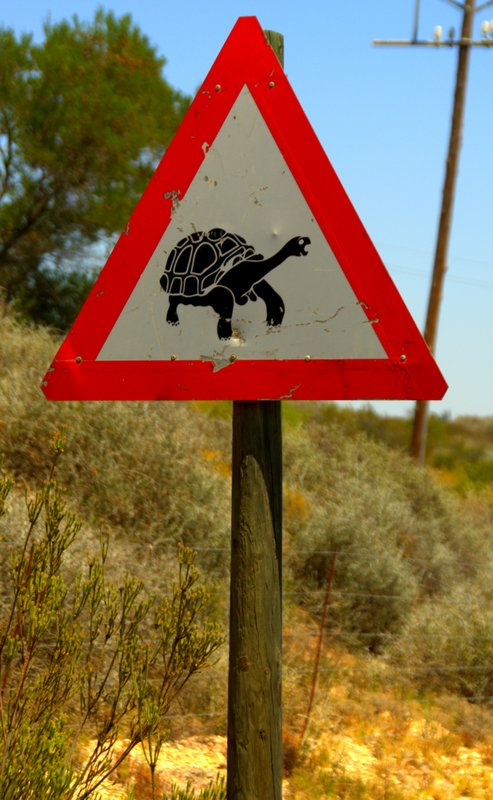
Just follow the African signs

It turns out Africa needs one more post. Because we were on a road trip, constantly moving, often on roads (if I may use the term loosely), we saw a lot of signs that deserve mention.

Some highlight the great places we went...


 ...or remind us about the the great drives we did. 


Some signs warned us about animal dangers...


...while others just let us know the animals were about. 


Many signs seemed somewhat unnecessary. 


But some were just weird.


Monday, 18 February 2013

Map of our African Road Trip Extravaganza


View African Road Trip Extravaganza in a larger map

(The map preview doesn't show all the connections between stops. If you click the link and view it in Google Maps, you can scroll down the list of items on the left and click "next page" and it will show more.)

Highlights and memorable moments


In no particular order:
  • Driving 9000 km around southern Africa with no guide
  • Getting used to not writing my PhD thesis
  • Eating dinner under the southern night sky inside an old fort in Namibia
  • The cleanest gas station bathrooms in the world (Namibia, how do you do it?)
  • The way ice cream tastes in the desert
  • Having it all come together despite the case of the disappearing travel agent
  • Exceptionally friendly people
  • Being mostly unplugged
  • Having B's lost credit card returned by Minen Hotel employee who tracked us down after we left town
  • Getting really, really sandy 
  • Everything about the desert
  • And...

Being self-sufficient in our safari truck
The way the desert goes on forever, just like the ocean
Flamingos migrating through Etosha Park and turning the horizon pink
    Quiver trees!
    Baby elephants that run full out, stumble and fall,
    get up and do it all over again
    Giraffes awkwardly crouching down to drink
      Three of my favourite things together:
      gin and tonic + hotel lounge + Africa
      (and there were monkeys, too!)
      Mongoose!
      Running in sand dunes
        Huge skies
        Long roads to nowhere
        Watching antelope run
        Not getting stuck on the isolated
        deep sand road in Savuti
        Not getting bitten by anything larger than a mosquito
        Not getting very stuck in the deep sand in Sossusvlei
        Digging out the truck of Germans
        who got stuck in the deep sand in Sossusvlei. . . in my skirt
        Improbably large birds
        Seeing a group of very rare wild dogs
        Realizing that "mist" at Victoria Falls
        is a euphemism for torrential downpour
        Only getting ripped off once
        (by the money changer/tout/fake insurance agent at the Zambia border)
        Realizing we live in an easier place
        than the ghost town Kolmanskop
        Knee deep ponds along the roads in Moremi
        Getting help from the army and the park rangers to reattach the 
        front end onto the truck after the said knee-deep ponds
        Weaver birds
        Random children changing our flat tire
        Finding a hippo in the flooded part of the road
        that we were about to drive through
        Being behind the safari truck
        that was confronting a grumpy bull elephant
        Sitting on the spare tire
        on top of the truck in the dunes
        Camping with warthogs in Kasane
        Walking on the crest of sand dunes
        to find nothing but more sand dunes
        Finding a very large and creepy spider spinning its web
        on the pillow in the back seat
        Running on the dunes
          Baobabs!
          Etosha pan, which goes on forever
          Zebras! Real ones!

          • Oh, and did I mention that I really, really like the desert?